


- This event has passed.
World Disability Day
December 3, 2014
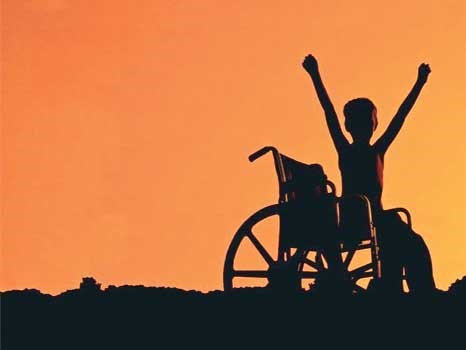
Today is International Day of Persons with Disabilities. According to the world report on disability, produced jointly by WHO and the World Bank, more than a billion people in the world today experience disability. People with disabilities have generally poorer health, lower education achievements, fewer economic opportunities and higher rates of poverty than people without disabilities because of many obstacles they face in their everyday lives. The report provides the best available evidence about what works to overcome barriers to health care, rehabilitation, education, employment, and support services, and to create the environments which will enable people with disabilities to flourish.
In his message the Secretary General of United Nations, Mr Ban Ki-moon said, Persons with disabilities have a significant positive impact on society, and their contributions can be even greater if we remove barriers to their participation. With more than one billion persons with disabilities in our world today, this is more important than ever.
There has been a drastic change in the policy level to look at the issue of disability in the recent decades. Previously, disability was only considered as a clinical issue and was dealt with medical understanding. However, nowadays it is more of an issue which needs in-depth social understanding. As stated by WHO, about 15 percent of the worlds population is disabled which is higher than the figure mentioned as 10 percent in 1970s. That tells us that the prevalence of disability is high and growing.
There are many definitions of disability. The Convention on the Rights of Persons with Disabilities states that disability is an evolving concept and results from the interaction between persons with impairments and attitudinal and environmental barriers that hinders their full and effective participation in society on an equal basis with others. Globally, the most common causes of disability include: chronic diseases (e.g. diabetes, cardiovascular disease and cancer); injuries (e.g. due to road traffic accidents, conflicts, falls and landmines); mental health problems; birth defects; malnutrition; and HIV/AIDS and other communicable diseases. It is alarming that an estimated 80 percent of persons with disabilities live in developing countries.
Disability is less of a burden for the sake of its nature; its more of a burden as the society often brings a stigma out of it. Salma Begum, mother of a disabled child describes about her day to day life, I usually take care of my son; other members of my family help as well. Besides me, my husband, my mother-in-law, my grandmother-in-law and my aunt-in-law also take care of my son. Sometimes when I am busy, they even clean him up after defecation. It is very difficult for me to do any kind of work with my son. I have to keep him with someone if I need to work. But sometimes theres no one to keep him. So it is quite difficult for me. The neighbours never help in taking care of the baby. They feel pity for us for having a disabled child. My mother-in-law and the neighbours say that my son has become disabled because I missed one vaccine during pregnancy. Actually I have taken all necessary vaccines. I got one vaccine when I was visiting my parents house, but they dont believe me. I feel sad that I have a disabled child. If he were healthy, he could walk. Then I could take him to different places. I cant do that now. It is very painful for me. If my son recovers, I will educate him. His grandfather says if he gets well, hell set up a shop for my son so that he can earn his livelihood.
Thus though there are frustrations around a disabled kid among the parents, neighbours there is still no reason why these kids cant grow up like others in society. The govt has a strong role to play to mainstream education, health and other facilities for the persons with disabilities. Disability has strong association with poverty. Lower income countries have a higher prevalence of disability than higher income countries. Similarly, disability is predominant in rural areas than in urban areas. Lack of medical facilities, inadequate insurance policy, dogmatic social values and weakening social security policies lead persons with disabilities towards poverty. It can be said that poverty and disability are inescapably associated. People, who are poor, seem to be more susceptible to disability than others. Poverty thus appears to be both cause and consequence of disability, underpinning each other through escalation of vulnerability and exclusion.
